How Small Gestures Shape Meaningful Learning
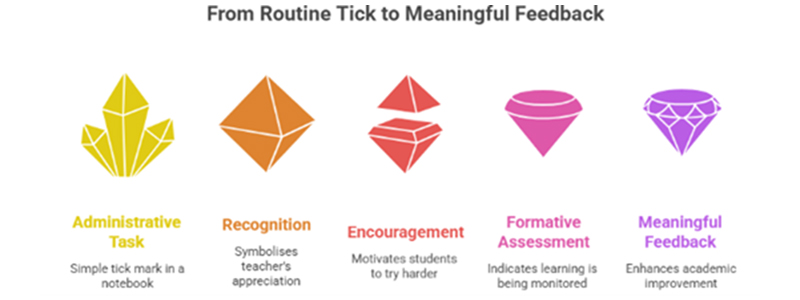
In the vibrant and dynamic environment of a classroom, teachers constantly balance numerous responsibilities. They plan lessons, facilitate discussions, manage classroom behaviour, and evaluate students’ progress. Amid these varied duties, certain practices may appear routine or insignificant. One such practice is the simple act of placing a tick mark in a student’s notebook. Though it may seem like a minor administrative task, this small gesture holds deep educational significance. It symbolises recognition, encourages discipline, and strengthens the connection between teaching and learning.
For students, especially young learners in primary and middle school, recognition from a teacher carries immense emotional and motivational value. A tick mark in a notebook silently conveys an encouraging message: “Your work has been seen and appreciated.” In a classroom where many students may hesitate to seek attention or express their doubts openly, this simple mark becomes a reassuring signal that their efforts matter.
Research on formative assessment highlights the importance of regular feedback in improving learning outcomes. Studies suggest that students who receive timely and consistent feedback demonstrate 25–30% greater academic improvement compared to those who receive feedback only during formal examinations. In this context, the humble tick mark goes beyond being a symbol of completion; it becomes a meaningful indicator that learning is being monitored and valued.
Building Responsibility and Academic Habits
Consistent notebook checking helps nurture a strong sense of responsibility and accountability among students. When learners know that their work will be reviewed by their teacher, they tend to complete tasks more carefully and sincerely. This practice gradually develops habits of punctuality, attention to detail, and ownership of learning.
Educational research on classroom engagement indicates that regular monitoring of student work can increase homework completion rates and classroom task consistency by 20–25%. It also helps reduce careless mistakes, as students become more mindful of what they write and how they present their work.
Over time, this simple routine contributes to the development of essential academic habits such as organised writing, clear presentation, and reflective revision. What initially begins as external motivation the expectation that the teacher will check the notebook—slowly transforms into internal discipline. Students start valuing the quality of their work, not merely its completion.
Encouragement That Builds Confidence
Beyond academic discipline, recognition from a teacher plays a vital role in building students’ confidence and motivation. Many learners, especially those who struggle with certain subjects, do not always seek perfection. Instead, they seek encouragement and reassurance that their efforts are worthwhile.
A simple tick mark can therefore serve as a powerful motivational tool. It acknowledges effort and signals progress, even when the work is not flawless. This recognition can encourage students to persist in their learning journey rather than feel discouraged by mistakes.
India’s former President and renowned scientist Dr. A. P. J. Abdul Kalam beautifully captured the essence of learning when he said, “Learning gives creativity, creativity leads to thinking, thinking provides knowledge, and knowledge makes you great.” When teachers recognise students’ efforts—even through small gestures—they help sustain this cycle of curiosity, creativity, and intellectual growth.
The impact of the tick mark becomes even more meaningful when accompanied by brief written feedback. Short comments such as “Good attempt,” “Revise the concept,” “Well presented,” or “Check this step” provide direction while maintaining encouragement. Educational studies indicate that specific and timely feedback can improve student performance by nearly 30%, highlighting the value of even small remarks written alongside a tick.
Strengthening the Teacher–Student Connection
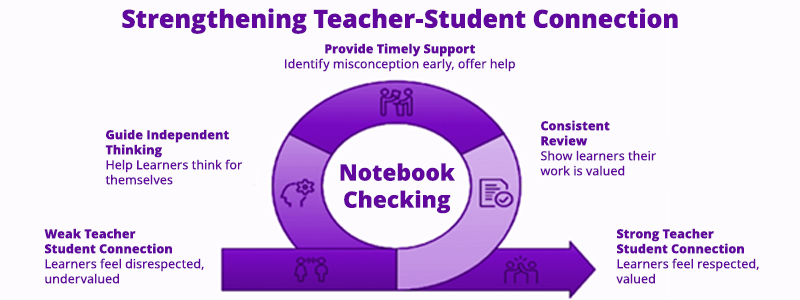
Notebook checking is not merely an assessment practice; it is also an opportunity to strengthen the relationship between teachers and students. When learners observe that their work is consistently reviewed, they feel respected and valued. This recognition builds trust and encourages them to participate more actively in classroom discussions and activities.
For teachers, reviewing students’ written work offers valuable insights into how learners think, understand concepts, and approach problem-solving. It helps identify misconceptions early and allows teachers to provide timely support. This deeper understanding enables educators to tailor their instruction more effectively to meet the needs of their students.
Philosopher and educationist Dr. Sarvepalli Radhakrishnan once remarked that “true teachers are those who help us think for ourselves.” By carefully reviewing and responding to students’ work, teachers gain the opportunity to guide learners toward deeper understanding and independent thinking.
Indian educational philosophy has long emphasised nurturing the potential within every learner. Swami Vivekananda famously said, “Education is the manifestation of the perfection already in man.” Even a simple tick mark, when offered sincerely, acknowledges effort, encourages perseverance, and reminds students that their learning journey is important.
Conclusion
The humble tick mark may appear small, but its influence in the classroom is far from insignificant. It represents acknowledgement, encouragement, and accountability. When used thoughtfully, it motivates students, strengthens learning habits, and builds confidence. In education, meaningful change often begins with simple practices performed consistently. By valuing such small yet powerful gestures, teachers create a supportive learning environment where students feel recognised and motivated to improve. Ultimately, the simple act of placing a tick mark becomes more than just a routine task—it becomes a symbol of guidance, appreciation, and the teacher’s commitment to nurturing responsible, confident, and lifelong learners.
About the Author
Vijay B is a Mathematics educator and academic leader with over thirteen years of teaching experience and three years in leadership roles. With Master’s degrees in Engineering and Education, he brings together strong subject expertise and effective teaching practices. His approach to education is guided by a commitment to meaningful learning and nurturing well-rounded, future-ready students.
He has received recognitions such as the Times Edu Ex Award and the Inspirational Guru Award (2024) for his contributions to student-centric and innovative education. He is dedicated to creating engaging and inclusive learning environments that foster curiosity, creativity, and critical thinking.
An avid reader, traveller, mentor, and poet, he is also the author of Beyond My Vision and Inkscapes and Echoes. Currently, he serves as Head – Academic Development at Vels Group of Schools, Chennai, where he continues to promote innovation and excellence in education.